Since my visit to the Bronze Age exhibition in Leiden last winter, I’m adding some new information about this era to my website. One very interesting subject is a relatively new find of the solar observatory near the Dutch town of Tiel, which you can read about more here.
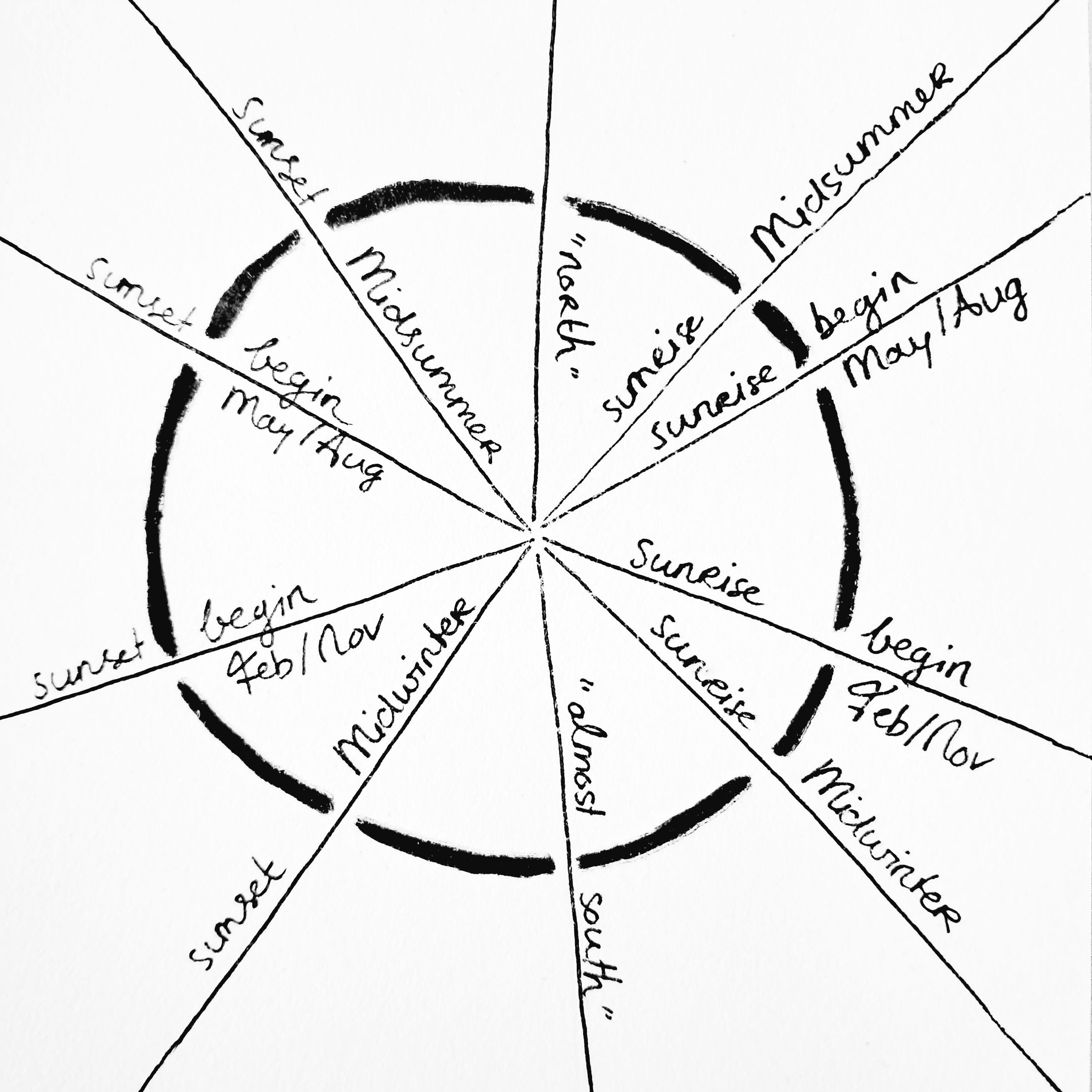
The observatory has popularly been dubbed the “Dutch Stonehenge” even though they look(ed) nothing alike. Like Stonehenge though, it is a solar observatory. What I find especially remarkable is that researchers found indications that the people who built the observatory, placed marks on the solstices and cross quarter days, and the way several burial mounds were situated indicates that they also observed the equinoxes. Behold the eight seasonal feasts celebrated during the Wiccan wheel of the year.
It has always been said that the wheel of the year is a modern invention by Gerald B. Gardner, the founding father of Wicca, a modern pagan religion of witchcraft. He assembled several seasonal celebrations that are known from folklore and myth and created the wheel. These eight feasts are Midwinter, Imbolc (beginning of February), the Spring Equinox, Beltane (beginning of May), Midsummer, Lammas (beginning of August), the Autumn Equinox, and Samhain (beginning of November). Historians say that this is a modern invention and that these feasts the way Gardner constructed them were never celebrated together by ancient peoples in .
However, to me the solar observatory throws the wheel of the year in a new light. Could it be that Gardner accidentally, without realising it, re-created a very old system in which people marked the natural cycle by using those same dates? I only just found out about this and there may be much information I’m missing, but I find it an exciting thought nonetheless. Go read for yourself. And have a happy Midsummer!
 thimsternisse